



How Much Down Payment Do You Actually Need?
The traditional advice of "save 20% for a down payment" is outdated. While 20% eliminates private mortgage insurance (PMI), most homebuyers put down far less. In 2026, the median down payment for first-time buyers is just 6-7%.
Down Payment Options by Loan Type
| Loan Type | Minimum Down Payment | PMI Required? | Best For |
|---|---|---|---|
| Conventional | 3-5% | Yes, until 20% equity | Good credit (680+) |
| FHA | 3.5% | Yes, for life of loan | Lower credit (580+) |
| VA | 0% | No | Veterans and active military |
| USDA | 0% | No (but guarantee fee) | Rural area buyers |
What Does This Mean in Dollars?
For a $350,000 home (near the 2026 national median):
| Down Payment % | Amount | Monthly PMI (est.) |
|---|---|---|
| 3% | $10,500 | $150-200/month |
| 5% | $17,500 | $120-170/month |
| 10% | $35,000 | $80-120/month |
| 20% | $70,000 | $0 |
Don't Forget Closing Costs
Beyond the down payment, budget for closing costs of 2-5% of the purchase price. On a $350,000 home, that's $7,000-$17,500. Total cash needed for a 5% down payment: approximately $25,000-$35,000.
Where to Save Your Down Payment
Your down payment savings need to be safe and accessible — this isn't money to invest in stocks.
Best Options
High-Yield Savings Account (4.25-5.00% APY): The best choice for most buyers. FDIC-insured, liquid, and earning competitive interest.
CD Ladder: If your timeline is 2-5 years, a CD ladder can lock in high rates while providing periodic access.
Money Market Account: Similar to HYSA with check-writing ability. Good if you need occasional access.
Avoid These for Down Payment Savings
- Stock market: Too volatile for a 1-5 year timeline
- Cryptocurrency: Far too risky for essential savings
- Regular savings account: Earning 0.01% means losing money to inflation
Strategies to Save Faster
1. Automate Your Savings
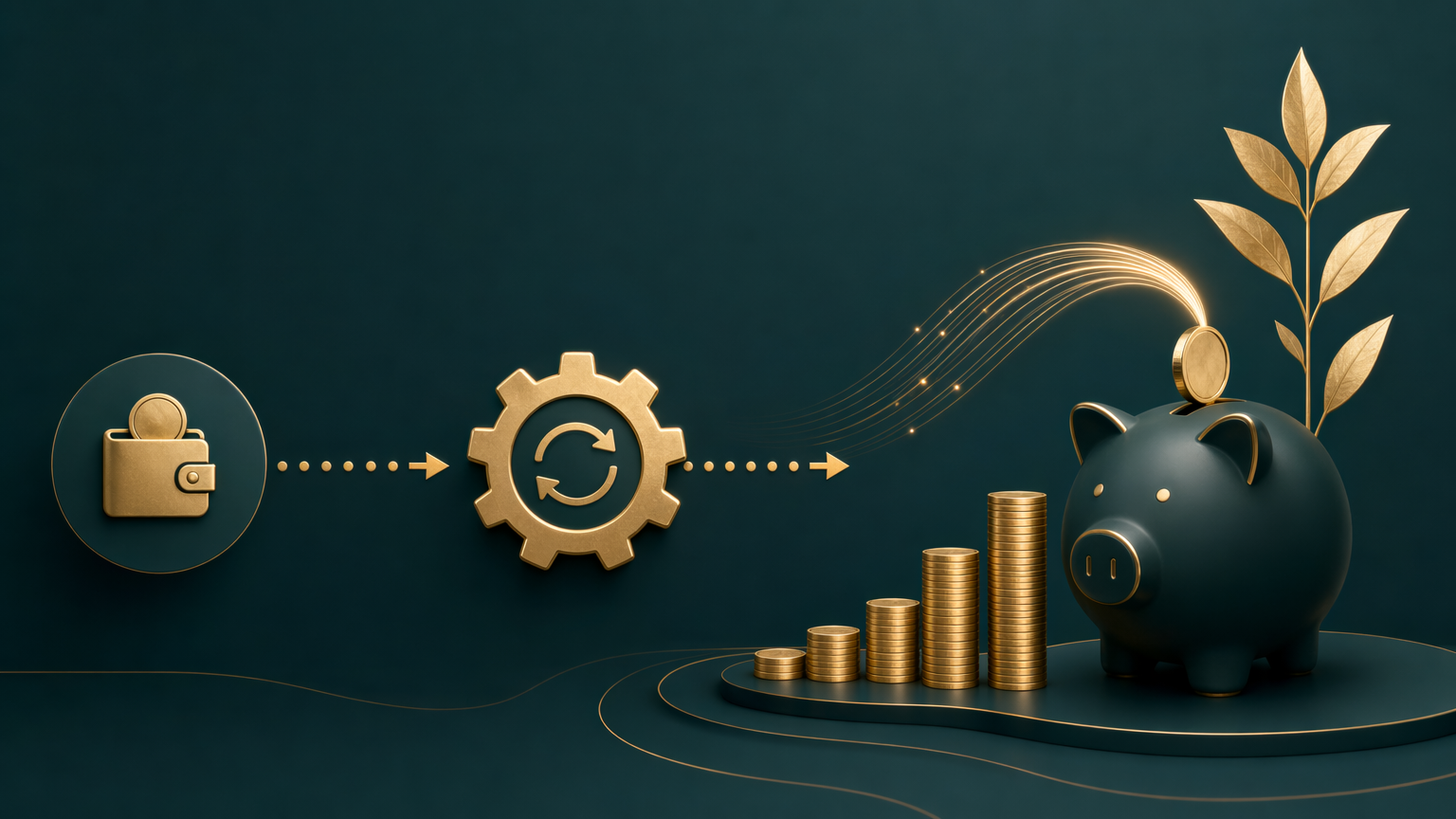
Set up an automatic transfer on payday. Treat your down payment savings like a bill that must be paid. Even $500/month adds up to $12,000 in two years (plus interest).
2. Use the 50/30/20 Rule
Allocate 50% of income to needs, 30% to wants, and 20% to savings. Temporarily shift to 50/20/30 (reducing wants) to accelerate your down payment fund.
3. Bank Your Windfalls
Tax refunds, bonuses, gifts, and side hustle income should go directly to your down payment fund. The average tax refund of $3,000+ can significantly accelerate your timeline.
4. Reduce Your Biggest Expenses
- Housing: Can you downsize or get a roommate temporarily?
- Transportation: Can you switch to one car or use public transit?
- Subscriptions: Audit and cancel unused services
5. Explore Down Payment Assistance Programs
Over 2,000 down payment assistance (DPA) programs exist nationwide. Many offer grants or forgivable loans for first-time buyers. Check with your state housing finance agency.
A Realistic Savings Timeline
Saving $25,000 for a 5% down payment + closing costs on a $350,000 home:
| Monthly Savings | Timeline | Interest Earned (4.5% APY) |
|---|---|---|
| $500/month | 4 years, 2 months | $2,300 |
| $750/month | 2 years, 9 months | $1,500 |
| $1,000/month | 2 years, 1 month | $1,100 |
| $1,500/month | 1 year, 5 months | $700 |
| $2,000/month | 1 year, 1 month | $500 |
Key Takeaways
- You don't need 20% down — 3-5% is realistic for most first-time buyers
- Budget for closing costs (2-5%) on top of your down payment
- Keep down payment savings in a high-yield savings account, not the stock market
- Automate savings and bank all windfalls to accelerate your timeline
- Explore down payment assistance programs — free money is available